After the party conferences
UK political party conference season 2026 offered competing visions of economic renewal. What was largely missing was the role of charities, philanthropy and the civic institutions that turn investment into shared prosperity.
Prosperity seems to be back at the centre of British politics.
Across this year’s party conferences, each of the main parties offered a different account of how the country might become wealthier, more secure and more confident about its future.
Labour emphasised public investment, devolution and greater control over essential services. The Conservatives turned towards lower taxation, private ownership and deregulation. The Liberal Democrats promoted green growth and more diverse forms of business. The Greens called for public and community finance, while Reform argued for a smaller state, cuts and drastic measurements.
These leave a larger question unanswered: What can increased prosperity actually unlock and who gets a stake in it?
Five versions of prosperity
Labour presented the most explicitly broader vision with announcements including a future National Care Service, stronger public influence over water, housing and energy, and the creation of Great British Grid. It also proposed a national commission on electoral reform involving businesses, trade unions, faith organisations and community groups.
This was framed as part of a wider effort to rewire Britain and establish a new social contract. Subsequent plans to give mayoral authorities greater control over innovation funding lend this argument practical weight but leaving questions for other sectors who have traditionally managed this space.
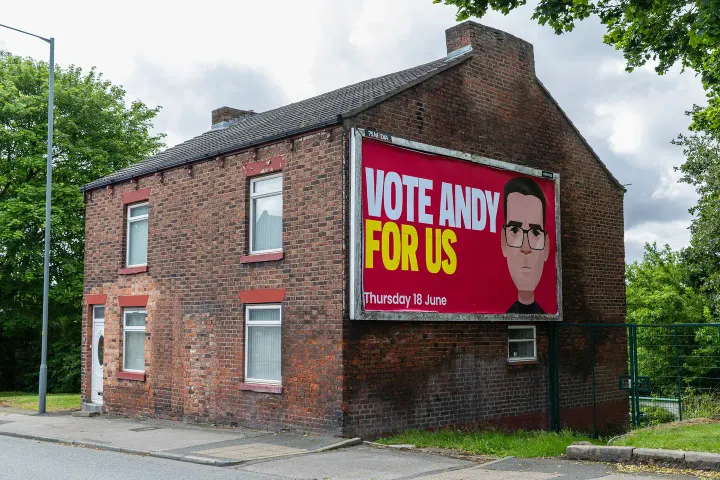
But moving money from Whitehall to regional government does not automatically make prosperity inclusive. The real test is whether residents, smaller businesses and community organisations acquire any greater influence over how investment is used and see the difference on the ground. Current polling suggests the public are responding to these moves and the new language from Andy Burnham.
The Conservatives offered a very different proposition: prosperity through ownership, inheritance, lower taxation and fewer regulatory constraints.
Their conference proposals included abolishing inheritance tax on the family home, reducing environmental requirements affecting new housing and removing public bodies including the Environment Agency and Natural England.
This might accelerate certain forms of investment, but it raises questions about where the costs eventually fall. Removing environmental or planning requirements does not necessarily eliminate those costs. It can transfer them to communities through inadequate infrastructure, nature loss, flooding or buildings requiring expensive future adaptation. Are we still feeling the legacy of austerity?
The Liberal Democrats came closest to articulating an impact-economy led proposition. They backed green growth alongside more mutuals, social enterprises and community-interest companies.
That recognises something frequently overlooked in economic policy: ownership at grass roots level matters. A community business, employee-owned company or social enterprise can retain wealth, relationships and decision-making power within a place.
The Greens went further in proposing public and regional banking, including community banks capable of directing finance towards smaller businesses and local priorities. As expected, but in general not a great few weeks for them as Zack Polanski led them into a deeply divisive set of issues.
Reform, meanwhile, presented prosperity principally as the product of lower public spending, reduced regulation and cheaper energy. But when the state retreats, unmet need does not disappear as austerity under the Conservatives has demonstrated. It frequently arrives at the doors of councils, food banks, churches and local charities or just every day people often without the resources required to meet it.
The missing institutions
Despite their differences, the conferences shared one notable omission. There was no developed political account of philanthropy, charitable capital or generosity, what we term social good.
Charities appeared as campaigners, service providers and participants in fringe events. They were rarely treated as essential civic institutions in their own right.
Yet charities do much more than deliver services commissioned by the state. They create relationships, organise volunteers, preserve shared places and give people practical ways to act on their concern for others. They are part of the infrastructure of trust and belonging.
At Labour’s conference, Jess Phillips called for Treasury rules to allow charities to receive multi-year funding. She also warned councils against automatically taking voluntary-sector services back in-house. It was a significant intervention, but remains advocacy rather than a confirmed government commitment.
The gap between political language about resilient communities and the financial condition of community organisations remains considerable. Government cannot credibly ask charities to prevent crisis and rebuild trust while funding them through short contracts that barely cover the cost of delivery. So charities need to be savvy about how they fundraise and what for.
Philanthropy also appears politically homeless. Debates about inheritance tax could consider the role of charitable legacies. more. Discussions about business taxation overlooked the role of corporate generosity (which continues to decline). Regional growth strategies seldom explain how trusts and foundations, individual donors and social investors might contribute patient capital to places.
Philanthropy cannot replace effective government or responsible business. But it can support experimentation, absorb risk and invest in relationships or organisations that conventional finance struggles to reach.
Key points: turning prosperity into shared purpose
If prosperity is to become visible beyond the conference platform, five things need to happen:
- Define prosperity more broadly. Measure fair opportunity, local ownership, environmental resilience, belonging and community agency alongside jobs and economic output. We've got to balance the growth narrative with some better metrics.
- Build civic partnerships around growth. Mayors and councils need businesses, universities, housing providers, charities and communities working around shared outcomes. Can these players agree shared purpose quickly? How do Combined Authorities take the lead on this?
- Give business a credible role in place. Connect employment, procurement, skills, investment and corporate giving with evidence of local need. Let's start to celebrate good practice and call out the impact washing.
- Bring philanthropy into devolution. Foundations, corporate funders, community-development lenders and local donors should complement public investment without substituting for it. The supply chain of funding in this space is not connected so we argue Mayors have a new role to play here, working closely with big philanthropy generators like community foundations and universities: this is happening in South Yorkshire and the North East but funders want to see more joined up thinking here.
- Protect the civic infrastructure beneath prosperity. Funding should be measured partly by whether it leaves vital local organisations stronger (or weaker) as much as who is inclusively benefitting from the impact. Funding for new shiney things and scaled up delivery can make or break charities.
From political ambition to place
This is where our services can contribute to your future ambitions: helping regional partnerships define their purpose of place; enabling businesses to develop impact strategies rooted in local need; convening institutions around shared outcomes; and aligning philanthropy with the long-term priorities of communities.
The proposition is straightforward:
Investment becomes shared prosperity only when people can see its value, influence its direction and believe they possess a stake in its success.
That is also the question behind the next episode of The Purpose Brief podcast.
We talk to the Mayor David Skaith who has a foot at the table of Number 10 North. He is the Mayor of York and North Yorkshire in a region of remarkable contrasts: one of England’s largest and most rural counties, centred on one of its most beautiful and historic cities.
It's really important to be on the front foot when you think about how your organisation can become more financially resilient, build trust and position yourself around a changing political landscape. That means co-designing responses to deliver your long term strategy. There are certain ingredients and approaches that need to be aligned correctly.
But it is never a one size fits all approach. If you would like to speak to us about how we could help design your fundraising priorities or align your stakeholders, please drop us an email to find out more about our work.