What a cult noughties low-fi comedy can teach us about power, identity and the very human need to belong.
“On wednesdays we wear pink.”
Few instructions in modern cinema have been delivered with such absolute authority and have outlasted their era. When Mean Girls arrived in cinemas in 2004, it gave us Regina George, the Plastics, the Burn Book in an endlessly quotable portrait of American high school life. Let's reflect also that this is is the year that Facebook was launched to a bunch of college pals in a Harvard dorm.
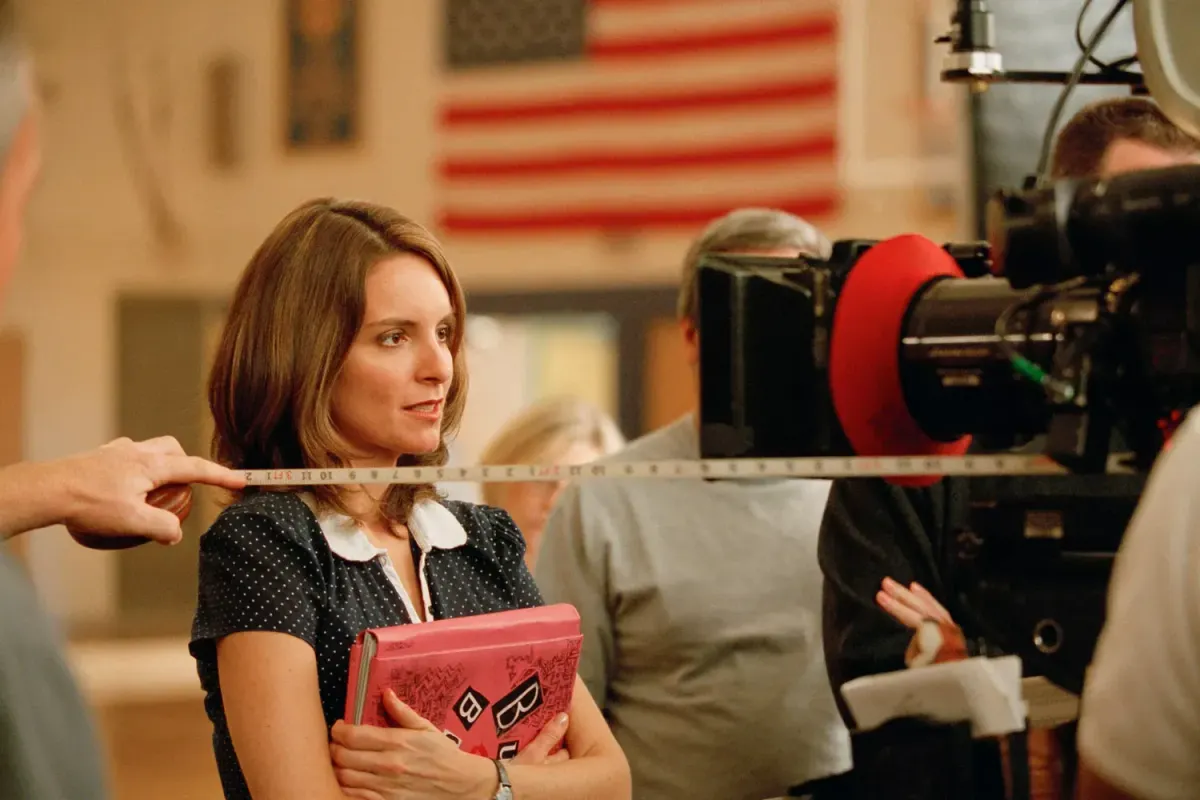
Building on the foundations of the John Hughes teen angst era, Mean Girls was a modern update to these high school tales of wild abandon and finding your self. Written by and staring Tina Fey(Ms. Norbury), the film became an instant hit and commercial success. Twenty-two years later, its influence remains remarkably strong and a popular manifestation for me of how power works in groups and the pressures facing young women.
Beneath the pink cardigans and teenage drama lies something rather more interesting because Mean Girls is really a story about power, social hierarchies and what happens when our desire to belong becomes more important than our ability to be ourselves.
Welcome to the social jungle
When Cady Heron arrives at North Shore High School, she discovers a social ecosystem divided into tribes, each with its own rules, territories and expectations.
At the top of the hierarchy sit the Plastics, led by the formidable Regina George, a character whose power is entirely informal. She holds no official position, yet commands extraordinary influence.
Her authority depends on something surprisingly familiar in teen angst movies: other people's willingness to recognise it. Membership of the Plastics promises status, security and belonging but the price is conformity with a specific set of rules.
The psychology of belonging
Psychologists Henri Tajfel and John Turner explored how our identities are shaped by the groups to which we belong. Groups give us meaning, solidarity and shared purpose. But they also create boundaries between insiders and outsiders.
In Mean Girls, those boundaries are comically obvious. The right clothes. The right friends. The right lunch table. And this familiar high school experience often correlates to the spheres we move within our adult life, often with much less entertaining wardrobes.
Think about our workplaces, the online mean girl hub of LinkedIn and the expanses of professional networks in our places. These are about the right stuff: connections, vocabulary, social background and cultural circles. It's a space for bias across a wide spectrum of manifestations.
French sociologist Pierre Bourdieu described how social and cultural capital whilst important in the fabric of how we interact with each other can help reproduce privilege and influence and somehow we become enamoured with it via these platforms. Regina George understood this instinctively and cultivated it. She controls the social currency of North Shore High, deciding who matters and who doesn't.
And perhaps her greatest achievement is convincing everyone that her rules are simply the natural order of things. And, if you are still reading, then this probably resonates with you in some way.
The Burn Book and the culture of fear
The Burn Book is a vicious and deeply unpleasant collection of gossip, insults and social sabotage and provides the ultimate instrument of reputational destruction to support the hegemony of its authors. The parallels with social media are difficult to ignore. Meta products are the Burn Books of the modern era.
Online pile-ons, public humiliation and the relentless pursuit of information on people has created a new pumped up version of some very old human behaviours. None of this is new, it is in fact part of human nature to be competitive and cliquey. It is also not very pleasant but you must know how to navigate it, how you can turn this behaviour into a positive and how you can also avoid becoming a Mean Girl too.
The Burn Book is an allegory for how organisations can end up managing their reputations in times of rapid change when they are up against financial strain: it is a lesson on how you as an organiser or a member of staff can use it to influence organisational culture.
When people fear embarrassment or exclusion, they become less willing to challenge authority, admit mistakes or offer different perspectives. They conform because it is the safest thing to do.
Organisational psychologist Amy Edmondson calls attention to the importance of creating spaces of psychological safety: creating environments where people feel able to speak up without fear of humiliation and creating agency for taking change and diverse opinions forward. It's difficult to imagine Regina George embracing that particular leadership philosophy.
Fitting in isn't the same as belonging
Perhaps the film's most important lesson comes through Cady's experience of being a newcomer with a different story. Initially independent, intelligent and curious, she gradually sacrifices her values in pursuit of popularity. She gains the social status she desires but loses something far more valuable: her agency and her purpose.
Agency is our ability to make choices, act on our values and influence the world around us. It becomes harder to exercise when acceptance depends on conformity or face the Burn Book.
This is where Mean Girls really hits home. How many people have stopped asking difficult questions because they wanted to fit in? How many times does our culture celebrate individuality while quietly rewarding those who look, think and behave like everybody else round the top table?
Why do we continue to mistake belonging for conforming to the dominant way of thinking. It's a really interesting question to reflect on as we see more and more change and transformation in our sectors where we have a radically altered relationship with our work places and communities, the threat posed to job creation by Artificial Intelligence and the rise of access to information on people you can be hyper connected to online but never meet in person.
You can sit with us
By the end of the film, the Plastics' social order has begun to unravel. The characters discover that the hierarchies they accepted were not built on strong foundations. They were created and sustained by their own behaviour and the Plastics were 'wilfully blind' to this.
This realisation is an optimistic realisation that these characters can also be taken on a redemptive journey. It's a glimmer of hope that it is always possible to take things forward differently when the Mean Girls are being protective and defensive.
At The Purpose Brief, we're interested in how people build trust, create agency and come together to improve the places and institutions they share.
That starts with recognising that belonging shouldn't be a privilege distributed by one organisation or a senior leadership team. It should be something we design into our daily lives for one another and how leaders recognise their responsibility to set standards and ask questions when we are not confident about the answers.
For some of you, the most important lesson from Mean Girls could be to wear pink on Wednesdays but for me, I think it is that we all have the power to change the rules at play on the Plastics table through persuasion and building something new, so you can say to them: “You can sit with us now.”
Now, that's fetch.
Go create your community of change out there.